
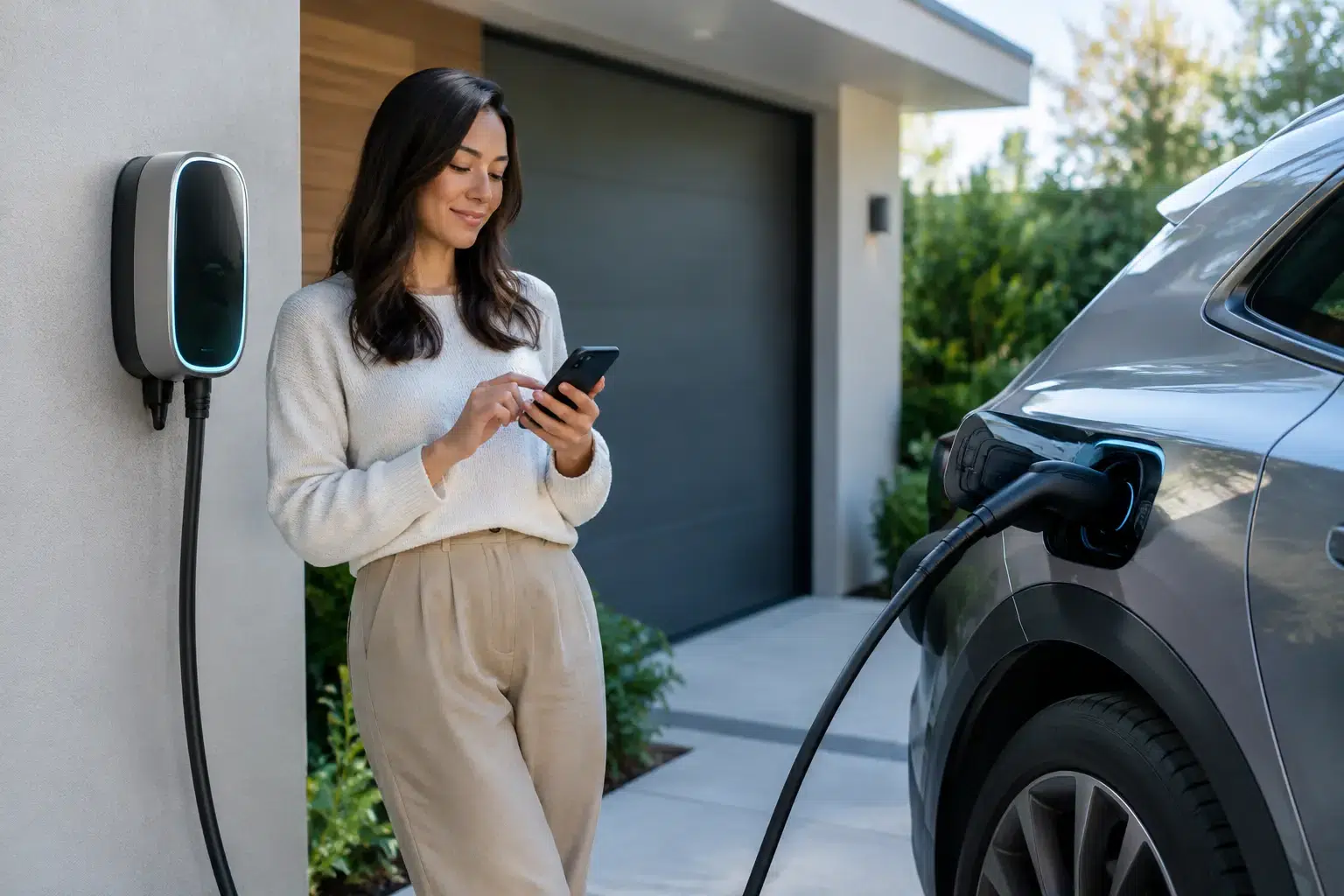
The Future of Home EV Charging Gets Smarter
A home charger is already one of the most useful upgrades an EV owner can make. It replaces public charging stops with a routine: park, plug in, and wake up with the range needed for the day. But the future of home EV charging is not simply about putting more power into a vehicle faster. It is about making charging work safely with the home, the electric panel, utility rates, storm preparedness, and the way families actually use their vehicles.
For homeowners and condo owners along coastal Alabama, that distinction matters. Electrical systems must be sized correctly, protected from the elements, and installed with a clear understanding of existing service capacity. The best charging setup is not always the highest-amperage charger. It is the one that fits the property and provides dependable charging for years.
The Future of Home EV Charging Starts at the Electrical Panel
Most Level 2 home chargers operate on 240 volts and can add far more range per hour than a standard household outlet. That makes them the practical choice for many drivers, especially households with longer commutes, larger battery packs, or more than one electric vehicle.
The limiting factor is often not the charger itself. It is the home’s electrical service. An older panel may already support air conditioning, electric water heating, kitchen appliances, pool equipment, laundry equipment, and other major loads. Adding a dedicated EV circuit without evaluating the total electrical demand can lead to nuisance breaker trips, an overloaded service, or an installation that does not meet current code requirements.
This is why a professional load calculation should come before selecting charging speed. A certified electrician reviews the service size, panel condition, available breaker space, existing loads, and the location of the charger. In some homes, a straightforward dedicated circuit is all that is needed. In others, a panel upgrade or service upgrade is the safer long-term investment.
That planning will become more valuable as electric appliances continue to replace gas equipment and as homes add batteries, solar systems, pool heaters, workshops, and second EVs.
Smart Load Management Will Reduce Unnecessary Upgrades
One of the most significant changes ahead is smarter load management. These systems monitor a home’s electrical demand and temporarily reduce or pause EV charging when other large loads are operating. When demand falls, charging resumes automatically.
For example, a home may be using substantial power while a central air conditioner, electric dryer, and oven are all running. A managed charging system can prevent the EV charger from pushing the electrical service beyond a safe limit at that moment. The vehicle still charges, but it does so in a way that respects the home’s available capacity.
This will not eliminate the need for service upgrades. A panel with damage, outdated equipment, inadequate capacity, or safety concerns still needs attention. However, load management can be a practical option for some homeowners who want EV charging without immediately increasing service size. The right answer depends on the home, the vehicle, daily driving needs, and the electrical loads already in place.
Charging Will Follow Energy Prices, Not Just Bedtime
Many EV owners charge overnight because it is convenient. In the future, more chargers will also respond to time-based electricity rates, utility demand programs, and a homeowner’s preferred schedule.
A smart charger may be set to begin charging after a lower-cost period starts, stop before a higher-cost period begins, or finish charging by a selected departure time. This can help households manage operating costs without requiring daily attention. The driver simply tells the vehicle or charger when the car needs to be ready.
The savings depend on the local utility structure. Not every area has time-of-use rates, and rate programs can change. Still, scheduling remains useful even where electricity costs are flat. It can help avoid charging during periods when a household is using the most power and can make better use of solar production when a solar system is present.
Smart features should be selected for usefulness, not novelty. A charger with more app controls is not automatically a better charger. Reliable hardware, correct installation, appropriate circuit sizing, and a clear warranty matter more than an app screen full of settings a homeowner will never use.
Bidirectional Charging Is Promising, but It Is Not Yet Simple
A major part of the future of home EV charging is bidirectional power. This technology allows certain vehicles to send electricity back out of their battery. Depending on the vehicle and equipment, that power might run tools, supply a limited set of household loads, or support a home during an outage.
The concept is appealing in Gulf Shores, Orange Beach, and other coastal communities where storm preparation is a real concern. An EV battery can store a substantial amount of energy, and using part of that energy for backup power could add another layer of resilience.
There are important limits, though. Vehicle-to-home and vehicle-to-grid systems require compatible vehicles, specialized equipment, proper transfer and safety controls, and utility coordination in some cases. They are not the same as plugging a portable appliance into the vehicle. A home backup connection must be designed to prevent electricity from feeding back onto utility lines during an outage, which could endanger line workers and damage equipment.
For many households, a standby generator or a dedicated home battery remains the more established backup solution today. For others, planning a charger location and electrical layout that can support future bidirectional equipment may be a sensible step. The technology is moving quickly, but homeowners should make decisions based on equipment that is available and approved now, not features that may arrive later.
More Homes Will Need to Plan for Two EVs
The first EV in a household changes the electrical conversation. The second one changes it again. A family with two electric vehicles may not need two high-powered chargers, especially if both vehicles are parked overnight for several hours. A properly designed system can share available power between chargers or prioritize one vehicle based on need.
Power-sharing chargers are likely to become more common. Instead of requiring each charger to have enough capacity for full output at the same time, the system divides available power intelligently. If one vehicle finishes charging, the other can receive more power. This approach can help control installation costs while still meeting real-world driving needs.
Parking layout deserves as much attention as electrical capacity. The charger should be located where the charging cable reaches the vehicle without stretching across walkways, driveways, or areas where it can be damaged. In garages, the mounting height and cable storage should be practical. At outdoor locations, equipment needs weather-rated protection and installation methods suited to the environment.
Condos and Rental Properties Need a Different Plan
Single-family homes are generally the easiest setting for EV charging because the homeowner controls the panel, parking space, and construction decisions. Condos, townhomes, and rental properties can be more complicated.
The question is often not whether charging is possible. It is who owns the electrical infrastructure, how electricity use will be measured, where conduits can run, and how future residents will be served. Installing one charger without a larger plan can create avoidable expense when several residents request charging later.
Property managers and associations should consider a phased approach. That may include evaluating service capacity, reserving electrical space, installing pathways for future wiring, and establishing a fair method for assigning charging costs. Early planning helps prevent a parking area from becoming a patchwork of difficult, expensive additions.
Safety and Installation Quality Will Remain Non-Negotiable
As EV charging equipment becomes more common, proper installation will stand out even more. A charger is a continuous electrical load that may operate for hours at a time. Loose connections, undersized conductors, incorrect breaker sizing, poor grounding, or equipment not rated for its location can create real safety risks.
Permits and inspections are not paperwork to work around. They help verify that the equipment, circuit, and installation method are appropriate for the job. This is especially important when a charger is installed outdoors, near a coastal environment, or on a property with aging electrical equipment.
MNE Electric approaches EV charger installations as part of the home’s complete electrical system, not as a device mounted on a wall. That means evaluating the panel, identifying the safest route for wiring, and recommending an installation that supports the owner’s needs without overselling capacity they do not need.
Plan for Flexibility, Not Just Today’s Vehicle
A homeowner buying an EV charger today does not need to predict every change in vehicle technology. They do need an installation that leaves reasonable room to adapt. Selecting a location with access for future wiring, keeping panel space available when possible, and choosing quality equipment can make later changes much easier.
The future of home EV charging will be smarter, more connected, and more closely tied to the rest of the home’s energy use. A careful electrical assessment now gives homeowners a safer starting point and keeps the next upgrade from becoming a larger problem than it needs to be.