
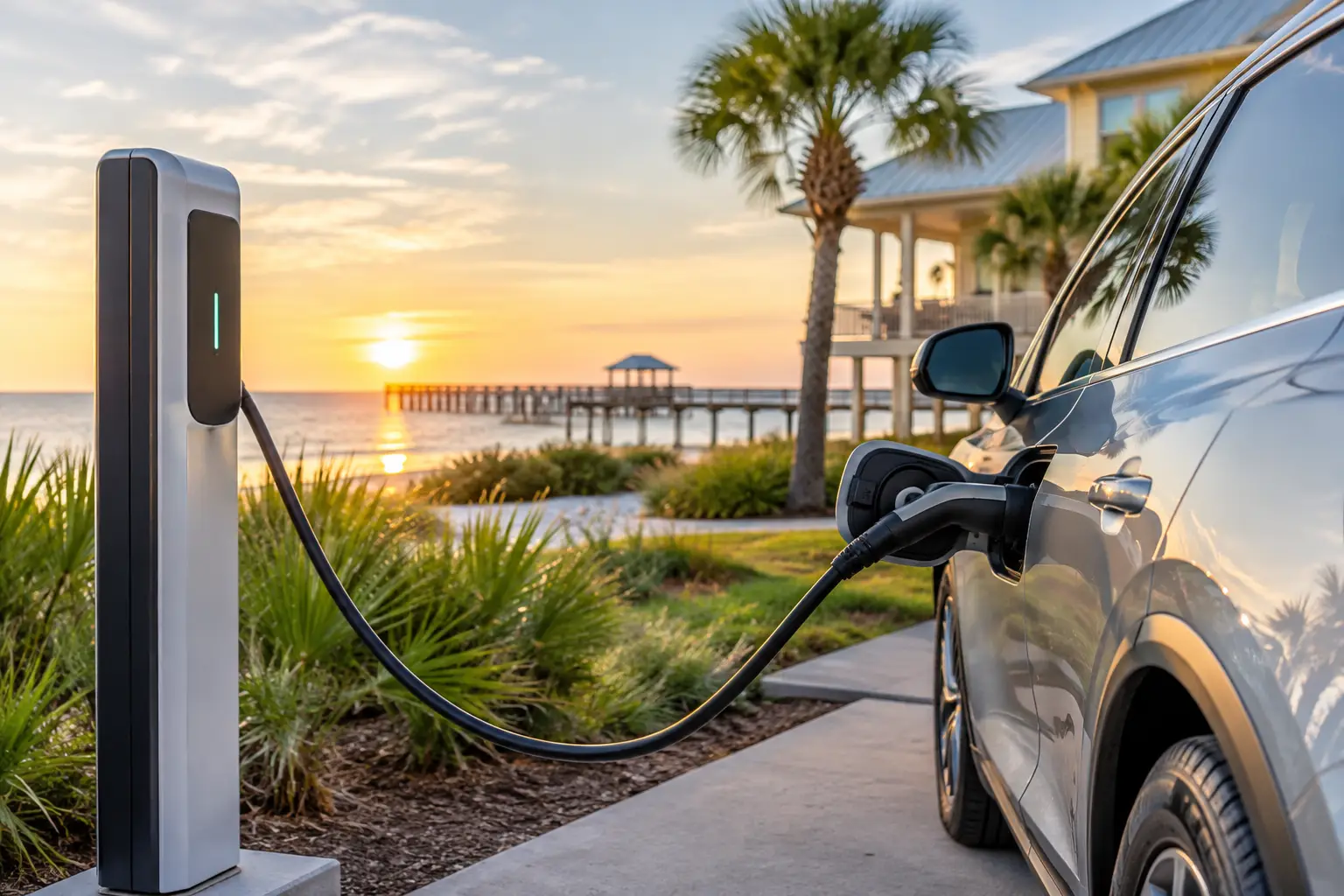
EV Charging Trends for Coastal Alabama Properties
A new EV does more than change what is parked in the driveway. It changes when and where a property uses electricity. The EV charging trends affecting homeowners, condos, hotels, and businesses are increasingly centered on dependable overnight charging, smarter power management, and electrical systems sized for what comes next.
For property owners along the Alabama coast, the question is rarely whether an EV charger is a good idea in the abstract. The practical questions are whether the existing panel has capacity, where equipment can be installed safely, how charging will affect daily use, and what the property may need as more drivers switch to electric vehicles.
EV Charging Trends Moving Beyond the Outlet
Early EV owners often relied on a standard 120-volt receptacle. This Level 1 approach can work for drivers with short daily commutes and plenty of time at home, but it is slow. For many households, a professionally installed Level 2 charger is becoming the more useful long-term choice.
Level 2 charging uses a dedicated 240-volt circuit, similar in concept to the power required by larger household appliances. It can add meaningful range overnight and makes daily charging more predictable. The exact charging speed depends on the vehicle, charger, circuit capacity, and installation, so equipment should be selected after evaluating the electrical system rather than before.
This shift matters because an EV charger is not simply another plug. It is a sustained electrical load that needs correct wire sizing, overcurrent protection, grounding, placement, and permitting where required. A proper installation helps protect the vehicle, the home, and the electrical system while giving the owner a charging setup they can rely on.
Homeowners Are Planning for the Next Vehicle
One of the clearest EV charging trends is planning beyond one car. A homeowner may install a charger for a single EV today, then find that a second driver wants one within a few years. Families are also adding electric golf carts, electric outdoor equipment, pool equipment, larger HVAC systems, and other loads that compete for available panel capacity.
That does not mean every home needs an immediate service upgrade. It depends on the age of the electrical panel, the size of the service, existing loads, and the charger being considered. A qualified electrician can perform a load calculation and inspect the panel to determine whether a dedicated circuit is enough or whether an upgrade should be part of the project.
Planning early can prevent a frustrating outcome later. If a panel is already crowded or undersized, installing charging equipment without addressing the underlying limitation may create safety concerns or leave little room for future improvements. In some cases, a service upgrade also supports planned additions such as a generator, new HVAC equipment, or a renovation.
Smart Charging Helps Manage Real-World Power Demand
Smart chargers and load-management equipment are gaining attention because they can help a property use available power more thoughtfully. Depending on the equipment and system design, charging can be scheduled during off-peak hours, monitored through an app, or adjusted when other major electrical loads are operating.
For a home with adequate capacity, a conventional Level 2 charger may be the straightforward answer. For a home or commercial site with limited capacity, load management can sometimes reduce the need for an immediate, larger upgrade. It is not a universal substitute for more electrical service, though. The right approach depends on the building’s calculated load, the number of chargers, and how consistently charging is needed.
Scheduling is also practical for everyday life. Many EV owners plug in when they arrive home and set the vehicle or charger to begin later in the evening. The goal is not to charge constantly. It is to have the vehicle ready when it is needed without turning charging into another task to manage.
Condo, Rental, and Hospitality Properties Need a Clear Plan
Multi-unit and commercial properties face a different set of decisions. A single-family homeowner usually controls the parking space, electrical panel, and charging schedule. Condo associations, rental owners, hotels, and businesses must consider shared parking, access, billing, future expansion, equipment ownership, and maintenance.
For these properties, installing one charger without a larger plan can lead to avoidable complications. A well-designed project considers where drivers park, how many spaces may need charging over time, whether chargers should be assigned or shared, and how the electrical infrastructure can expand in phases.
For example, a condo property may not need chargers in every parking space immediately. It may be more cost-effective to prepare conduit paths, panel space, and electrical capacity for future chargers while installing a smaller number now. This can reduce disruption and protect the property from having to reopen pavement, walls, or finished areas later.
Hotels and vacation rentals in Gulf Shores and Orange Beach may see EV charging as a guest convenience, but reliability is the deciding factor. A charger that is poorly located, difficult to access, or frequently unavailable does little for the guest experience. Clear parking policies, durable equipment, proper protection from the elements, and a service plan deserve as much attention as the charger itself.
Coastal Conditions Affect Charger Installation
Coastal Alabama brings conditions that should influence equipment selection and installation details. Heat, humidity, salt air, wind-driven rain, and outdoor exposure can be hard on electrical equipment over time. Charging equipment needs to be rated for its location and installed according to manufacturer instructions and applicable electrical codes.
Placement matters. A charger should be accessible to the vehicle without creating a trip hazard or stretching the cable across walkways. Outdoor equipment should be securely mounted, protected from unnecessary impact, and located with weather exposure in mind. For garages, the installation still needs to account for vehicle clearance, cable management, and the conditions around the panel and branch circuit.
Surge protection is another practical consideration. Modern EVs, chargers, and connected appliances contain sensitive electronics. Whole-home or facility surge suppression can be worth discussing as part of a broader electrical upgrade, especially in areas where storms and power disturbances are a concern.
What to Address Before Installing an EV Charger
A dependable project starts with the property, not the charger box. An electrician should review the main service size, panel condition, available breaker space, anticipated electrical load, parking layout, and distance from the panel to the charging location. Longer runs, difficult routing, trenching, and finished-wall access can affect project scope and cost.
Homeowners should also consider how they drive. Someone who travels 25 miles a day has different needs than someone who drives 150 miles several times a week. A plug-in hybrid, a full battery-electric vehicle, and a fleet vehicle can also have different charging requirements. Choosing the highest-powered charger available is not always necessary or cost-effective.
The same principle applies to commercial properties. The best system is the one that supports actual drivers, fits the property’s electrical capacity, and can grow without forcing a complete redesign. A free estimate and site evaluation can help turn those questions into a realistic plan.
EV Charging Trends Are Becoming Electrical Planning Trends
The larger change is that EV charging is becoming part of normal property planning. Like backup power, surge protection, and service upgrades, it is an investment in how a building will operate over the next several years. It can improve convenience for a household, support tenant expectations, and help a business prepare for changing customer and employee needs.
MNE Electric helps property owners evaluate EV charger installations with the full electrical system in mind, from dedicated circuits and panel capacity to safe placement and future expansion. The right charger is valuable, but the right installation is what makes it dependable every day.
If an EV is in your driveway now or likely to be there soon, start with an electrical assessment before choosing equipment. A properly planned installation can keep charging simple today while leaving your home or property ready for what comes next.