
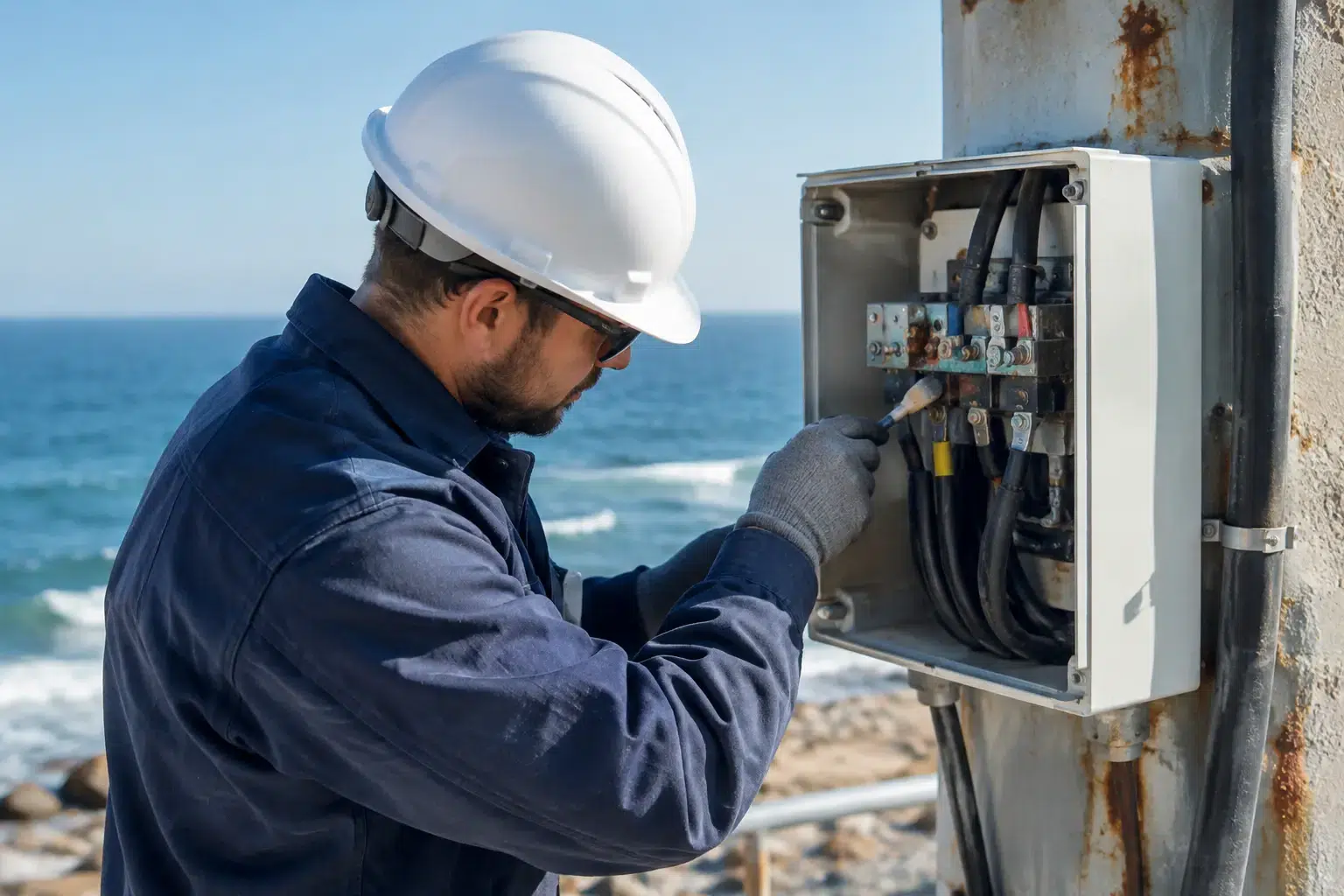
A Coastal Corrosion Repair Example for Electrical Systems
Salt air does not need a direct hit from a hurricane to damage electrical equipment. On the Alabama coast, moisture and airborne salt can work their way into outdoor panels, disconnects, conduit fittings, receptacles, and service equipment a little at a time. This coastal corrosion repair example shows why a minor-looking issue at an exterior electrical connection can become a safety and reliability concern if it is left alone.
For homeowners, condo owners, and property managers in Gulf Shores and nearby coastal communities, the practical lesson is simple: corrosion is not only cosmetic. It can weaken connections, create heat, let water enter equipment, and shorten the life of components that should be dependable for years.
A coastal corrosion repair example at an outdoor disconnect
Consider a typical repair at a coastal rental property: the air-conditioning system is still running, but the owner notices intermittent cycling and a faint buzzing sound near the outdoor unit. The disconnect box beside the condenser appears intact from several feet away. Up close, however, there is rust at the lower edge of the enclosure, white and green buildup around metal parts, and staining below the conduit entry.
After safely shutting down power and inspecting the equipment, the electrician finds several related problems. The enclosure seal has deteriorated, allowing humid air and wind-driven rain to enter. The line-side terminals show corrosion, and one conductor termination is discolored from excess heat. The grounding connection is also oxidized. The disconnect may still pass power, but its condition no longer supports a reliable or safe installation.
The proper repair is not to brush off the corrosion, tighten a screw, and call the job finished. Depending on the equipment condition, a lasting repair may include replacing the damaged disconnect enclosure, installing listed weather-resistant fittings, correcting the conduit entry, replacing compromised connectors or conductors, and making secure terminations to manufacturer specifications. The electrician then verifies grounding and tests operation under normal load.
That approach addresses both the failed component and the route moisture used to reach it. Otherwise, the same repair could be needed again much sooner than expected.
Why coastal corrosion creates electrical problems
Salt-laden air accelerates the natural breakdown of exposed metal. Add high humidity, temperature swings, heavy rain, and occasional storm conditions, and outdoor electrical equipment faces a tougher environment than similar equipment installed inland.
Corrosion raises electrical resistance at connections. Higher resistance can generate heat when equipment is operating, especially at high-demand loads such as air conditioners, pool equipment, water heaters, EV chargers, and commercial refrigeration. Heat can damage insulation and terminals, further weakening the connection.
Corrosion can also compromise the equipment enclosure itself. A rusted panel door, loose hub, cracked gasket, or poorly sealed conduit penetration can allow more moisture inside. Once moisture enters, damage may spread beyond the visible area. This is why a clean-looking exterior does not always mean the electrical components inside are in good condition.
Not every rusty fastener means a full equipment replacement is necessary. Surface corrosion on a non-electrical exterior screw is different from corrosion on a live terminal, grounding connection, breaker bus, or service conductor. The right decision depends on where the corrosion is located, how far it has progressed, whether heat damage is present, and whether the enclosure can still protect the components inside.
Warning signs property owners should not ignore
Electrical corrosion often develops quietly, but several signs warrant a professional inspection. A breaker that trips repeatedly, lights that flicker when larger equipment starts, or an air conditioner that cycles unpredictably can point to a loose or deteriorated connection. A buzzing sound, burning odor, warm cover, or discoloration around an electrical enclosure deserves prompt attention.
Outside, look for rust streaks beneath a meter base, disconnect, panel, or exterior receptacle cover. White powdery buildup, green discoloration around copper, cracked covers, missing screws, and gaps around conduit are also warning signs. For condos and commercial properties, common equipment rooms, pool systems, exterior lighting controls, and rooftop units should be included in routine maintenance planning.
After a major storm or flooding event, do not assume equipment is safe because the power is still on. Water exposure can affect internal parts even when the enclosure looks mostly normal. If there is any concern that electrical equipment was submerged or heavily exposed to water, have it evaluated before continued use.
Repair versus replacement: making the practical call
A sound repair begins with a clear assessment, not a one-size-fits-all answer. If corrosion is limited to a replaceable fitting or a single connection and the enclosure remains structurally sound, targeted repairs may be appropriate. This can be a cost-effective solution when completed with compatible, properly rated materials.
Replacement is often the safer choice when corrosion has affected critical terminals, damaged internal bus components, weakened the enclosure, or caused overheating. Reusing heavily compromised equipment to save money can create repeat service calls, unexpected outages, and a higher safety risk. It may also make little sense to install new conductors or a new load on equipment that is already near the end of its useful life.
Property use matters, too. A primary residence has different operating patterns than a vacation rental, restaurant, marina-adjacent business, or condominium building. Systems that cannot tolerate downtime may justify a more proactive replacement decision. The same is true when an owner is adding a larger HVAC system, standby generator, EV charger, or other major electrical load. Addressing corroded equipment before an upgrade helps protect the investment.
Preventing the next corrosion repair
Coastal conditions cannot be eliminated, but the damage they cause can often be reduced through good installation practices and regular checks. Electrical equipment must be suitable for its location, installed with proper weather protection, and maintained before small gaps become larger failures.
Owners can support that work by keeping vegetation away from outdoor equipment, avoiding pressure washing directly into electrical enclosures, and reporting loose covers or damaged conduit promptly. Exterior receptacle covers should close properly, even when a cord is plugged in where continuous use is expected. Equipment should not be painted shut, blocked by stored items, or left with missing knockouts and openings.
For buildings near the water, periodic electrical inspections are especially valuable. An inspection can identify deteriorating fittings, loose terminations, aging service equipment, and surge protection needs before a failure interrupts cooling, security systems, pumps, or business operations. The timing depends on the property, exposure, and equipment age, but annual attention is a sensible starting point for many high-exposure installations.
Surge suppression is worth considering as part of an overall protection plan, particularly after electrical repairs or service upgrades. It will not stop corrosion, but it can help protect sensitive electronics and appliances from voltage spikes associated with storms and utility disturbances. Backup power planning may also be appropriate for properties that rely on refrigeration, medical equipment, security systems, or essential business operations.
When to call a licensed electrician
Do not open panels, meter bases, disconnects, or energized outdoor equipment to investigate corrosion. These components can contain dangerous voltage, and corrosion can make parts more fragile or unpredictable than they appear. Turning off a breaker may not remove power from all parts of the equipment.
A licensed electrician can determine whether the issue is surface-level, connection-related, or evidence of broader equipment failure. They can also identify whether an outdated installation, incorrect fitting, missing weather seal, or drainage problem is contributing to repeated damage. That distinction is what turns a short-term fix into a repair that is built for coastal service.
MNE Electric helps property owners address corrosion-related electrical concerns with practical recommendations and careful workmanship. The goal is not to replace equipment unnecessarily. It is to leave the system safe, properly protected, and ready for the demands placed on it.
Salt air is part of life on the Gulf Coast. A loose cover, rust stain, or intermittent electrical issue is a good reason to act early, before a manageable repair becomes an outage or a safety problem.