
Do Generators Need Permits in Coastal Alabama?
A generator can keep the lights on after a coastal storm, but the equipment itself is only part of the job. Do generators need permits? For many permanently installed standby generators, the answer is often yes. The exact requirements depend on the property, the generator type, fuel source, and the local authority with jurisdiction over the work.
For homeowners and property operators in Gulf Shores, Orange Beach, and nearby Baldwin County communities, permitting is not just paperwork. It helps confirm that the generator is safely connected, properly located, and able to operate without creating hazards for occupants, neighbors, utility workers, or the property itself.
Do Generators Need Permits? It Depends on the Installation
A portable generator that is rolled out during an outage and connected to individual appliances with extension cords usually does not require a building permit. That does not make it risk-free. Portable units must stay outdoors, well away from doors, windows, vents, and garages to prevent carbon monoxide exposure. They should never be connected directly to a home’s electrical panel without an approved transfer device.
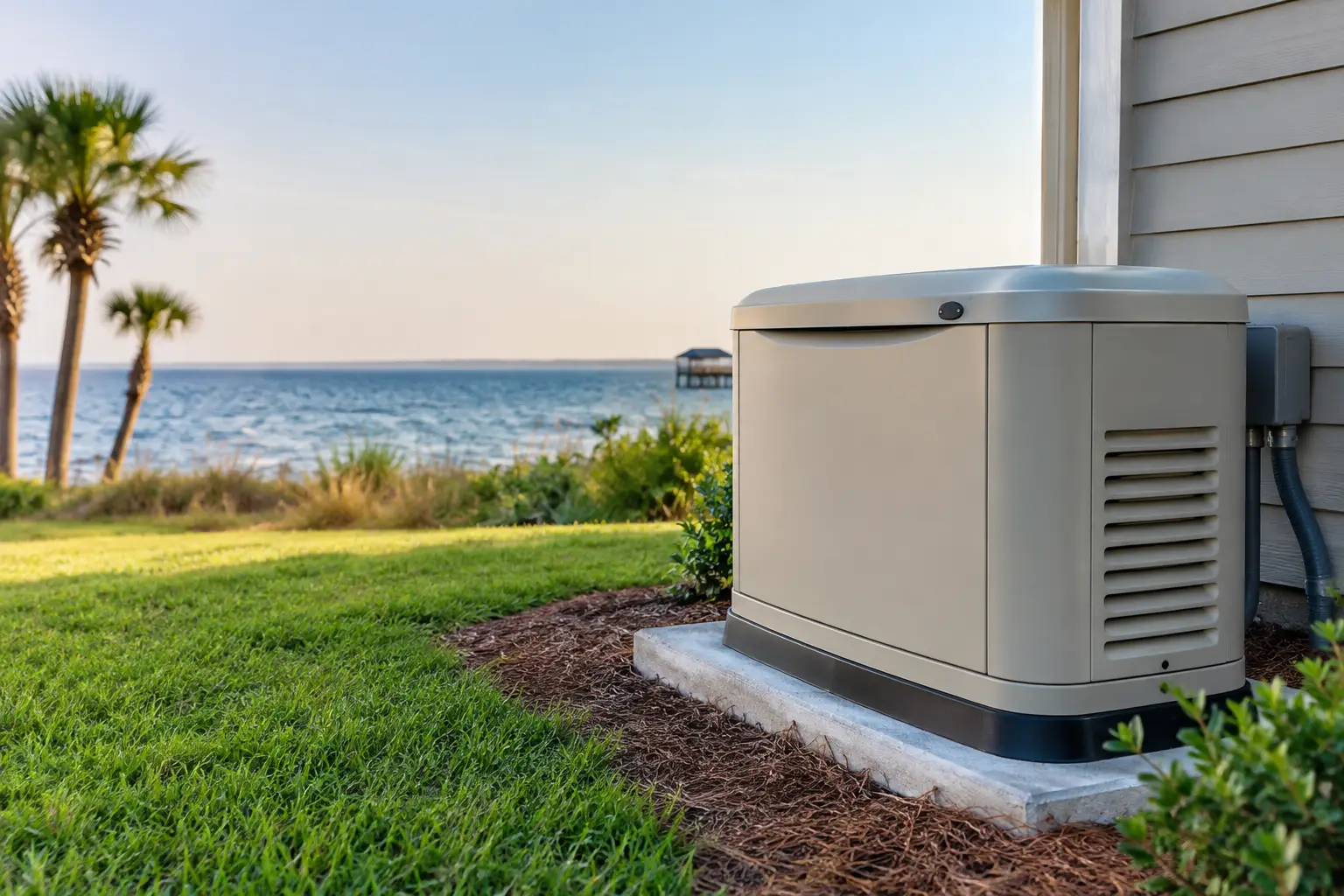
A permanently installed standby generator is different. These systems are wired into the home’s electrical service through an automatic transfer switch or similar approved equipment. They may also require a concrete or composite pad, a natural gas or propane connection, and coordination with the utility. Those parts of the project commonly trigger permit and inspection requirements.
Even when a permit is not required for one portion of the work, another portion may require approval. For example, the electrical connection may need an electrical permit, while fuel piping could require a separate permit or inspection. A local building department can confirm the specific requirements for an address before work starts.
Why Permits Matter for Backup Power
The main purpose of a permit is safety. A whole-home generator must disconnect from utility power before it energizes the property during an outage. Without a correctly installed transfer switch or interlock, generator power can backfeed into utility lines. That creates a serious danger for line crews working to restore service and can damage equipment when utility power returns.
Permitting and inspection also help verify that the generator is sized and installed correctly. A system that is too small may not start essential loads such as air conditioning, refrigeration, well pumps, or commercial equipment. A system that is too large can add unnecessary cost, use more fuel, and require larger electrical or gas infrastructure than the property needs.
Placement matters as well. Generators need required clearances from openings, combustible materials, property lines, and other equipment. Coastal properties can have tight lots, elevated construction, flood considerations, and condominium rules that make placement more complicated than it appears on a site plan.
For businesses, permits can also protect continuity planning. A properly designed installation can support selected critical loads, such as emergency lighting, refrigeration, security systems, communications equipment, or point-of-sale systems, without overloading the generator.
What May Require Approval
Requirements vary by municipality and property type, but a standby generator project may involve several approvals. A qualified electrical contractor can identify what applies to the planned installation and submit or coordinate the necessary information.
Common items include:
- Electrical permit for the transfer switch, feeder wiring, panel work, and generator connection
- Building or site approval for the equipment pad and generator location
- Gas or fuel permit for natural gas piping or propane connections
- Zoning review for setbacks, noise rules, or placement near property lines
- Utility coordination when the project affects metering, service equipment, or the gas supply
- HOA, condominium association, or property management approval where private community rules apply
Not every project needs every item on this list. A small standby generator serving a single-family home may have a simpler path than a larger unit at a restaurant, condo complex, or commercial building. Still, it is better to identify requirements early than to move equipment after a failed inspection or complaint.
Coastal Alabama Adds Practical Considerations
Backup power is a practical investment along the Gulf Coast, where hurricanes, tropical systems, wind events, and severe thunderstorms can interrupt service. At the same time, the local environment affects generator planning.
Salt air and humidity can accelerate corrosion, particularly around electrical connections, enclosures, fasteners, and fuel components. Equipment selection, proper mounting, weather-rated materials, and routine maintenance all matter. A generator should be installed where service technicians can access it safely without compromising required clearances.
Flood-prone areas can also affect equipment location. A contractor may need to consider finished grade, drainage, elevation requirements, and whether the proposed pad or fuel equipment is suitable for the site. This is one reason a location that seems convenient beside the house may not be the best compliant location.
Noise is another consideration. Modern standby generators are designed to run at manageable sound levels, but placement still matters. Running the unit near a neighbor’s bedroom window, a shared condo area, or a short property line can create problems even if the generator fits physically.
The Difference Between a Portable Generator and a Standby System
Portable generators are less expensive up front and can power a few essential items during an outage. They are useful for temporary needs, but they require manual setup, manual refueling, and safe cord management. They should never operate indoors, in a garage, under a carport, or close to the building.
A standby generator is permanently installed and typically starts automatically when utility power fails. It can be configured to power a limited set of critical circuits or, when properly sized, much of the home or building. The trade-off is a higher installation cost and a more involved permitting process. For many coastal homeowners, the convenience and safety of automatic operation make that process worthwhile.
A transfer switch is the key distinction. If a portable generator will connect to a home’s electrical system through an inlet, rather than powering appliances by cords, that connection should be professionally designed and installed. Depending on local requirements, it may also require a permit and inspection.
Who Pulls the Permit?
In most cases, the licensed contractor performing the regulated work pulls the appropriate permit. This helps ensure the permit application matches the actual equipment, wiring method, service capacity, and site conditions.
Homeowners should be cautious about being asked to pull an electrical permit for work that a contractor will complete. An owner-issued permit can place responsibility on the homeowner for code compliance, inspections, and corrections. There are situations where owner permits are allowed, but a professionally installed generator is usually best handled by a qualified, licensed contractor who understands the project requirements from start to finish.
Ask before signing an estimate: Which permits are expected? Are permit fees included? Who schedules inspections? What happens if the site requires a change to the original plan? Clear answers prevent surprises later.
Plan Before Ordering the Generator
Generator permits are easier to manage when the electrical design comes first. Start by deciding what must stay powered during an outage. For a home, that may include refrigeration, lighting, internet equipment, select outlets, HVAC, a well pump, or medical equipment. For a business, priorities may include refrigeration, security, communications, emergency systems, or essential operations.
Next, have a qualified professional evaluate the electrical service, proposed generator location, fuel availability, and load requirements. A load calculation is more useful than choosing a generator based on square footage alone. Large motor loads and air conditioning equipment can change the size and configuration needed.
MNE Electric can help property owners evaluate generator installation needs, including the electrical connection, transfer equipment, and site-specific factors that affect a safe, code-conscious project. The goal is not simply to install a generator. It is to make sure it will be ready when the power is not.
A backup generator should bring peace of mind, not a last-minute permitting issue. Before selecting equipment or pouring a pad, confirm local requirements and build the system around the property, the loads that matter most, and the conditions it will face during an outage.