
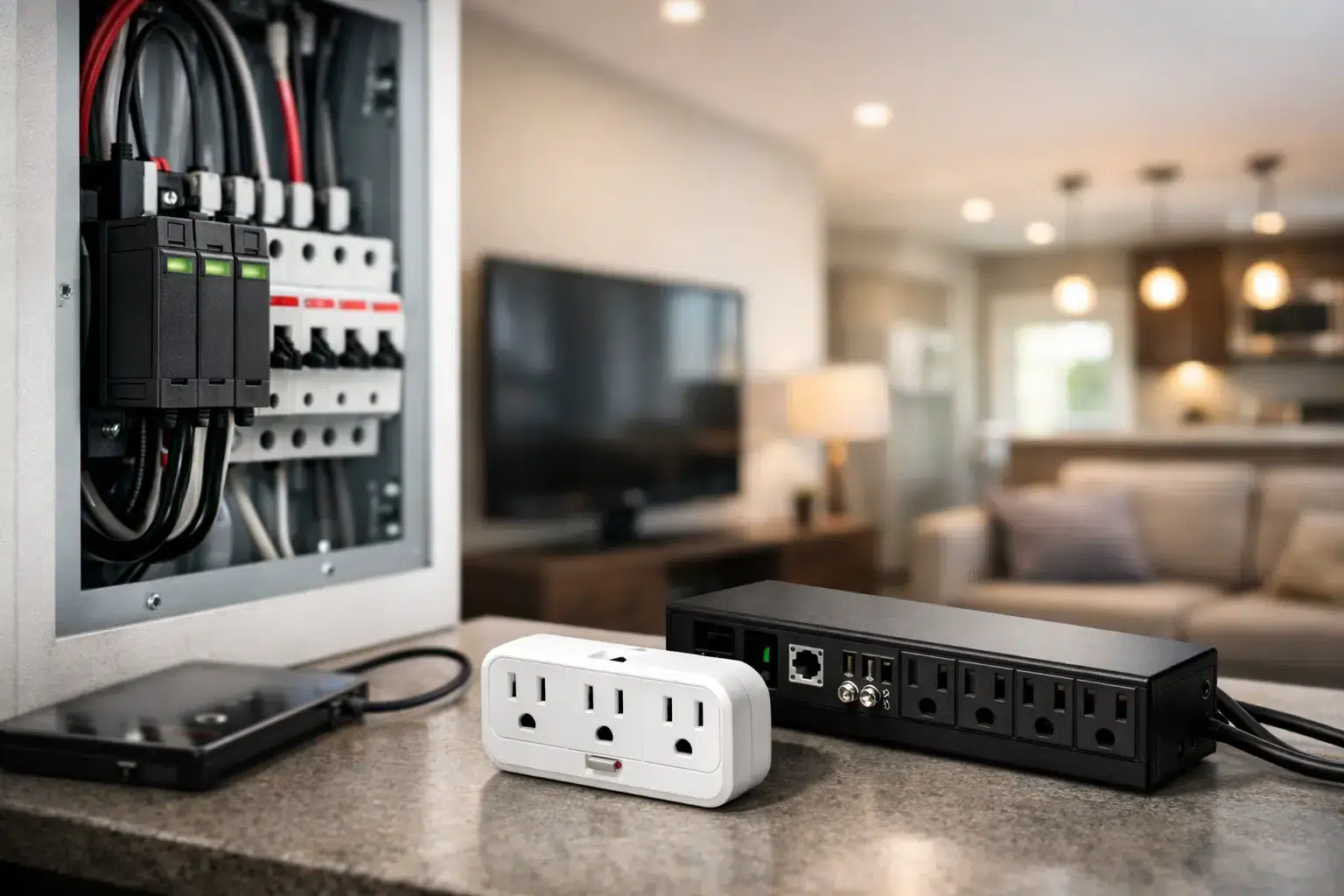
How to Choose Surge Suppression for Your Home
A lightning storm does not have to strike your home directly to damage electronics. A nearby strike, utility switching event, or power interruption can send a brief voltage spike through electrical wiring. That spike may last only a fraction of a second, but it can shorten the life of appliances, HVAC controls, televisions, networking equipment, and smart-home devices. Knowing how to choose surge suppression starts with understanding that not all surge protectors provide the same level of coverage.
For most homes and commercial properties, the strongest approach is layered protection: a properly installed whole-home surge protective device at the electrical panel, followed by point-of-use protection for sensitive electronics. The right equipment depends on your electrical system, the equipment you want to protect, and how exposed the property is to storm activity and utility disturbances.
Start With Whole-Home Surge Protection
A whole-home surge protective device, often called an SPD, is installed at or near the main electrical panel. It is designed to divert excess voltage away from the building’s electrical system before it reaches branch circuits and connected equipment.
This is different from a plug-in power strip. A quality power strip can help protect the television or computer plugged into it, but it cannot protect hardwired equipment such as an air conditioner, refrigerator, water heater, range, garage-door opener, or panel-mounted EV charger. It also cannot stop a surge from entering through another circuit and affecting equipment elsewhere in the building.
For a primary residence, condo, rental property, or business location, a panel-level SPD is usually the first protection upgrade to consider. It covers far more of the electrical system than individual plug-in devices and provides a foundation for additional protection where it is needed most.
How to Choose Surge Suppression by Type
Surge protective devices are commonly identified by type. The type matters because it indicates where and how the device is intended to be installed.
Type 1 surge protective devices
Type 1 devices are installed on the utility side of the main service disconnect or at the service equipment, depending on the system design and the product listing. They are often used for service entrance protection and may be appropriate in certain residential, commercial, and larger facility applications.
Type 2 surge protective devices
Type 2 devices are installed on the load side of the service disconnect, commonly at the main panel or a subpanel. This is a frequent choice for whole-home surge protection because it protects circuits feeding appliances, electronics, and other equipment throughout the building.
Type 3 surge protective devices
Type 3 devices are point-of-use protectors, including quality surge-protecting power strips and receptacle-level devices. They are useful for equipment that is especially sensitive or expensive, such as computers, entertainment systems, medical equipment, networking hardware, and office electronics.
In many properties, the practical answer is not choosing one type over another. It is using a Type 1 or Type 2 device at the panel and Type 3 protection at sensitive equipment. This layered approach gives surges more than one opportunity to be safely redirected.
Check the Ratings That Actually Matter
Product packaging can make surge protection look simple, but the numbers deserve a closer look. A certified electrician can help compare devices, especially when selecting a panel-mounted unit, but homeowners and property managers should know what to ask about.
Look for a device listed to UL 1449, the safety standard used for surge protective devices. This listing helps confirm that the unit has been tested for its intended purpose. Avoid treating an inexpensive, unlisted device as a substitute for professionally selected and installed protection.
The voltage protection rating, often shown as VPR, indicates the voltage level that may remain after the SPD responds to a surge under test conditions. Generally, a lower VPR means the device limits more of the surge voltage. It is not the only factor, but it is a useful comparison point when evaluating similarly rated products.
Also consider surge current capacity, often expressed in kiloamps, or kA. A higher rating can indicate that the device is built to handle larger surge events or repeated exposure. It does not mean the device makes a property invulnerable to lightning. Instead, it gives the device more capacity to manage the electrical stress it is designed to handle.
For homes in Gulf Shores, Orange Beach, and nearby coastal communities, repeated thunderstorms and weather-related outages make dependable whole-home protection a practical consideration. A device should also be suitable for the panel voltage and electrical service configuration. A 120/240-volt single-phase home panel requires a device designed for that system, while commercial properties may have different voltage and phase requirements.
Match Protection to the Equipment You Own
The more electronics and electronically controlled equipment a property has, the more valuable surge suppression becomes. Modern appliances often contain control boards. HVAC systems use electronic controls, thermostats, and communicating components. Even equipment that appears simple may have circuit boards that are costly to replace.
Pay particular attention to equipment that is expensive, difficult to replace, or essential to daily operations. This may include HVAC equipment, refrigeration, security systems, internet and Wi-Fi equipment, home offices, televisions, point-of-sale systems, access controls, and medical or life-safety-related equipment.
EV chargers and standby generators also deserve a careful review. These systems are significant electrical investments, and their installation can change the demands on a panel. Surge protection should be considered as part of the overall electrical design, not added as an afterthought. The same is true when upgrading a service panel or adding a major appliance circuit.
A whole-home SPD does not protect every possible path a surge can take. Cable, telephone, network, antenna, and low-voltage wiring can also bring voltage spikes into a building. If a property has exterior cameras, satellite equipment, data cabling between buildings, or a structured media panel, ask an electrician whether those systems need coordinated protection as well.
Do Not Overlook the Electrical Panel
The best surge protective device is only as effective as its installation. Panel condition, breaker availability, grounding, bonding, wiring length, and manufacturer requirements all affect the result.
Some devices connect through a dedicated breaker, while others mount directly to the panel using approved connections. The leads must be kept as short and straight as practical because excess conductor length can reduce performance during a fast surge event. The device must also be compatible with the panel and installed according to its listing and electrical code requirements.
Older panels may create additional questions. If the panel shows corrosion, has recalled or obsolete components, lacks available space, has questionable grounding, or is undersized for the property’s current load, surge protection may need to be part of a broader electrical upgrade. Installing a new SPD will not correct unsafe panel conditions or solve chronic voltage problems caused by loose connections, overloaded circuits, or failing equipment.
Coastal air adds another consideration. Salt and humidity can contribute to corrosion around exterior equipment, meter bases, disconnects, and panels. A qualified electrician can assess whether the mounting location, enclosure rating, and condition of the electrical equipment are appropriate before adding surge suppression.
Know What Surge Suppression Can and Cannot Do
Surge suppression is a valuable safeguard, but it is not a guarantee that no equipment will ever be damaged. A severe direct lightning event, damaged utility equipment, poor grounding, or a surge entering through an unprotected low-voltage line can exceed the protection in place.
It also does not replace a properly installed lightning protection system where one is warranted. Lightning protection systems and surge protective devices serve related but different purposes. One addresses the path of a lightning strike to ground; the other helps limit damaging voltage transients inside electrical and electronic systems.
Think of surge protection as risk reduction. It helps protect equipment from common transient events, reduces the chance of costly electronic failures, and adds another layer of resilience after storms and power disturbances. It is particularly worthwhile when a property relies on sensitive controls and connected devices.
When to Schedule a Professional Evaluation
A professional evaluation makes sense when you are installing a generator, EV charger, new HVAC system, service upgrade, or major renovation. It is also wise after repeated equipment failures, a lightning-related incident, or a storm that caused unusual electrical behavior.
For commercial spaces and multi-unit properties, protection should be evaluated at more than one panel when the electrical system includes subpanels or detached structures. A single SPD at the main service may not provide the same level of protection to equipment located farther away on long branch circuits.
MNE Electric can evaluate the panel, grounding, equipment needs, and installation options so the selected surge protection fits the property rather than relying on a one-size-fits-all device. A properly chosen and installed SPD is a relatively small electrical upgrade that can help protect the larger investments connected to your power system.