
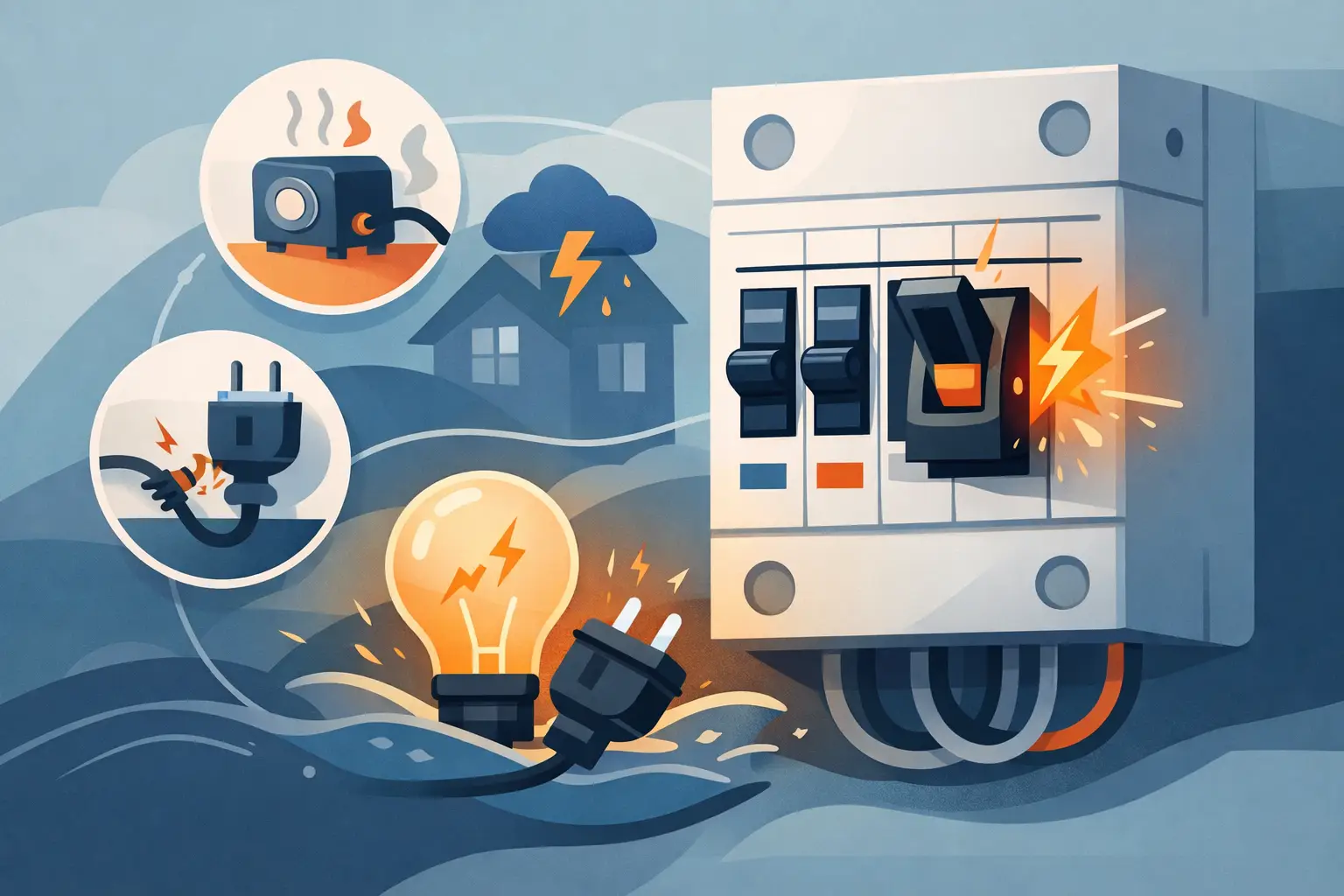
What Causes Circuit Breaker Tripping?
A breaker that trips once during a storm or while running too many appliances might not seem like a big deal. But when the same breaker keeps shutting off power, it is usually telling you something useful about the condition of your electrical system. If you have been asking what causes circuit breaker tripping, the short answer is that the breaker is doing its job – stopping electrical flow when it detects a condition that could damage wiring, equipment, or create a fire risk.
What causes circuit breaker tripping most often?
In homes and commercial buildings, most breaker trips come back to a few common issues. The first is an overloaded circuit. This happens when more electrical demand is placed on a circuit than it was designed to handle. A bedroom circuit running a few lamps is one thing. That same circuit powering space heaters, gaming equipment, and a window AC unit is another.
The second common cause is a short circuit. A short happens when hot and neutral wires touch where they should not, causing a sudden surge in current. The third is a ground fault, which is similar but involves electricity taking an unintended path to ground. Ground faults are especially common in kitchens, bathrooms, garages, outdoor areas, and other locations where moisture is present.
There are also cases where the breaker itself is the problem. Breakers can wear out over time, especially in older panels or in coastal environments where humidity and salt air can contribute to corrosion. In Baldwin County properties near the water, that is not something to ignore.
Overloaded circuits are the most common reason
An overloaded circuit is often the simplest explanation, but not always the easiest to solve long term. Every circuit has an amp rating, and once the connected load goes beyond that limit, the breaker trips to prevent overheating. This can happen instantly or after several minutes, depending on how much demand is being placed on the circuit.
You may notice this when a microwave and coffee maker run at the same time, or when a hair dryer trips a bathroom breaker. In commercial settings, it might show up when office equipment, refrigerators, point-of-sale systems, or lighting are all sharing one branch circuit.
The trade-off here is convenience versus capacity. Many properties were built for a lower electrical demand than what people use now. Large TVs, dedicated home office equipment, EV chargers, tankless water heaters, and modern kitchen appliances all add up. Resetting the breaker may restore power, but it does not increase the circuit’s capacity.
Signs your breaker is tripping from overload
If the breaker trips only when certain appliances are used together, overload is a strong possibility. The same is true if the trip happens after the circuit has been under load for a little while rather than the instant a device turns on.
Warm outlets, flickering lights, or frequent trips on the same breaker are signs the circuit may need to be evaluated. In some cases, redistributing loads helps. In others, the better solution is adding a dedicated circuit or upgrading part of the electrical system.
Short circuits and ground faults are more serious
When people ask what causes circuit breaker tripping, they often assume it is just too many things plugged in. That does happen often, but short circuits and ground faults deserve more attention because they can point to damaged wiring, failing devices, or unsafe conditions inside walls, outlets, fixtures, or equipment.
A short circuit usually causes the breaker to trip immediately. You might hear a pop, notice a burnt smell, or find that the trip happens every time a specific light switch or appliance is used. Damaged insulation, loose connections, pinched wires, and internal equipment failure can all cause this kind of problem.
Ground faults are common where water and electricity are close together. A bathroom receptacle, an outdoor outlet, a pool-related circuit, or a garage device exposed to moisture may trigger a trip because current is escaping its intended path. On the Gulf Coast, humidity, weather exposure, and salt air can make these issues more likely over time.
When moisture is part of the problem
Coastal properties deal with conditions that can affect electrical systems differently than inland homes. Outdoor equipment, disconnects, receptacles, and panels may be exposed to moisture and corrosion for years. Even when everything was installed correctly, age and environment matter.
If a breaker trips after heavy rain, high humidity, or storm activity, moisture intrusion should be considered. That does not mean the breaker is faulty. It may be detecting a real hazard.
Appliance and equipment problems can trip a breaker
Sometimes the issue is not the wiring in the building but the device connected to it. A breaker may trip because an appliance has a failing motor, a compressor pulling too much current, or internal wiring damage. This is common with HVAC equipment, refrigerators, disposal units, washing machines, and older commercial equipment.
A useful clue is whether the breaker trips only when one specific item is running. If the circuit stays on until that appliance starts, the load or the appliance itself may be the trigger. That still needs proper diagnosis. Replacing the breaker without checking the equipment can miss the real issue.
There is also an it-depends factor here. Some motors have a high startup draw that may be normal, while others are signaling wear. A licensed electrician can test the circuit and determine whether the breaker is responding correctly or whether the equipment needs repair.
Arc fault and GFCI protection can trip for safety reasons
Newer homes and updated electrical systems often include AFCI and GFCI protection. These devices are designed to trip under conditions that standard breakers may not catch as quickly. That is good for safety, but it can confuse property owners who are used to thinking only in terms of overloads.
An AFCI breaker looks for dangerous arcing that can happen with damaged cords, loose connections, or deteriorating wiring. A GFCI trips when it senses current leaking where it should not. In both cases, nuisance trips are possible, but repeated trips should never be dismissed without inspection.
If one of these protective devices keeps tripping, the answer is not to bypass it. The better approach is to find out whether the problem is with the connected device, the wiring, or the breaker.
Could the breaker panel itself be the issue?
Yes. Breakers and panels are not meant to last forever. Loose bus connections, aging components, overheating, corrosion, and outdated equipment can all lead to tripping problems. In older homes, you may also run into undersized service, crowded panels, or prior modifications that no longer match present-day electrical demand.
This is especially relevant for homes and businesses that have added major loads over time. If your property now includes updated kitchen equipment, more HVAC demand, a generator connection, or EV charging, the panel may need to be reviewed as part of the bigger picture.
A breaker that feels loose, smells burnt, trips without a clear pattern, or will not reset consistently should be checked promptly. Those are signs that go beyond ordinary overload.
What you can do before calling an electrician
Start with what changed. Think about whether a new appliance was added, whether the trip happens only in wet weather, or whether it is tied to one switch, outlet, or room. That information can help narrow down the cause.
You can also unplug portable devices on the affected circuit and reset the breaker once. If it holds, reconnect items one at a time. If it trips again immediately, or if you notice burning odor, buzzing, discoloration, or heat, stop there and have the system inspected.
The one thing you should not do is force the breaker to stay on or keep resetting it repeatedly. A breaker that trips over and over is reacting to something, and repeated resets can make a bad situation worse.
When to bring in a licensed electrician
If the same breaker trips more than once, if the cause is not obvious, or if the issue involves a panel, wiring, outdoor equipment, or moisture, professional diagnosis is the safe next step. Electrical problems are not always visible from the outside, and guessing can be expensive.
For homeowners, condo owners, and property managers in Gulf Shores, Orange Beach, and surrounding areas, fast service matters when power problems affect comfort, operations, or safety. MNE Electric handles breaker issues, panel evaluations, repairs, and upgrades with the goal of getting it fixed correctly the first time.
A tripping breaker is inconvenient, but it is also one of the clearest warning signs your electrical system can give you. Paying attention to it now is often the best way to prevent a larger repair later.