
Top Electrical Improvements for Rental Properties
A rental unit can look freshly updated and still frustrate tenants if outlets are loose, breakers trip during normal use, or the air conditioning loses power on a hot Gulf Coast afternoon. The top electrical improvements rental properties need are not always the most visible ones. They are the upgrades that reduce safety risks, prevent service calls, support modern living, and protect the property over time.
For owners and property managers in Gulf Shores, Orange Beach, and nearby coastal communities, electrical planning also has to account for humidity, salt air, storm exposure, and the demands of short-term rentals. A qualified electrician can help identify what should be addressed now, what can be planned for later, and where an upgrade will make the greatest difference.
Start With an Electrical Safety Inspection
Before selecting new fixtures or adding convenience features, establish the condition of the existing system. This is especially important in older homes, condos, and rental properties that have changed hands several times. Previous repairs may not meet current standards, panels may be undersized, and added appliances may be drawing more power than the original system was designed to handle.
An electrical inspection can identify damaged wiring, loose connections, improper grounding, overloaded circuits, aging panels, and exterior equipment affected by moisture or corrosion. It also gives owners a practical list of priorities rather than a vague recommendation to “update the electrical.”
For a turnover between tenants, an inspection can be a smart preventive step. It is easier and less disruptive to repair a concern in an empty unit than to respond to an after-hours call once a tenant has moved in.
Upgrade the Electrical Panel When Capacity Is Limited
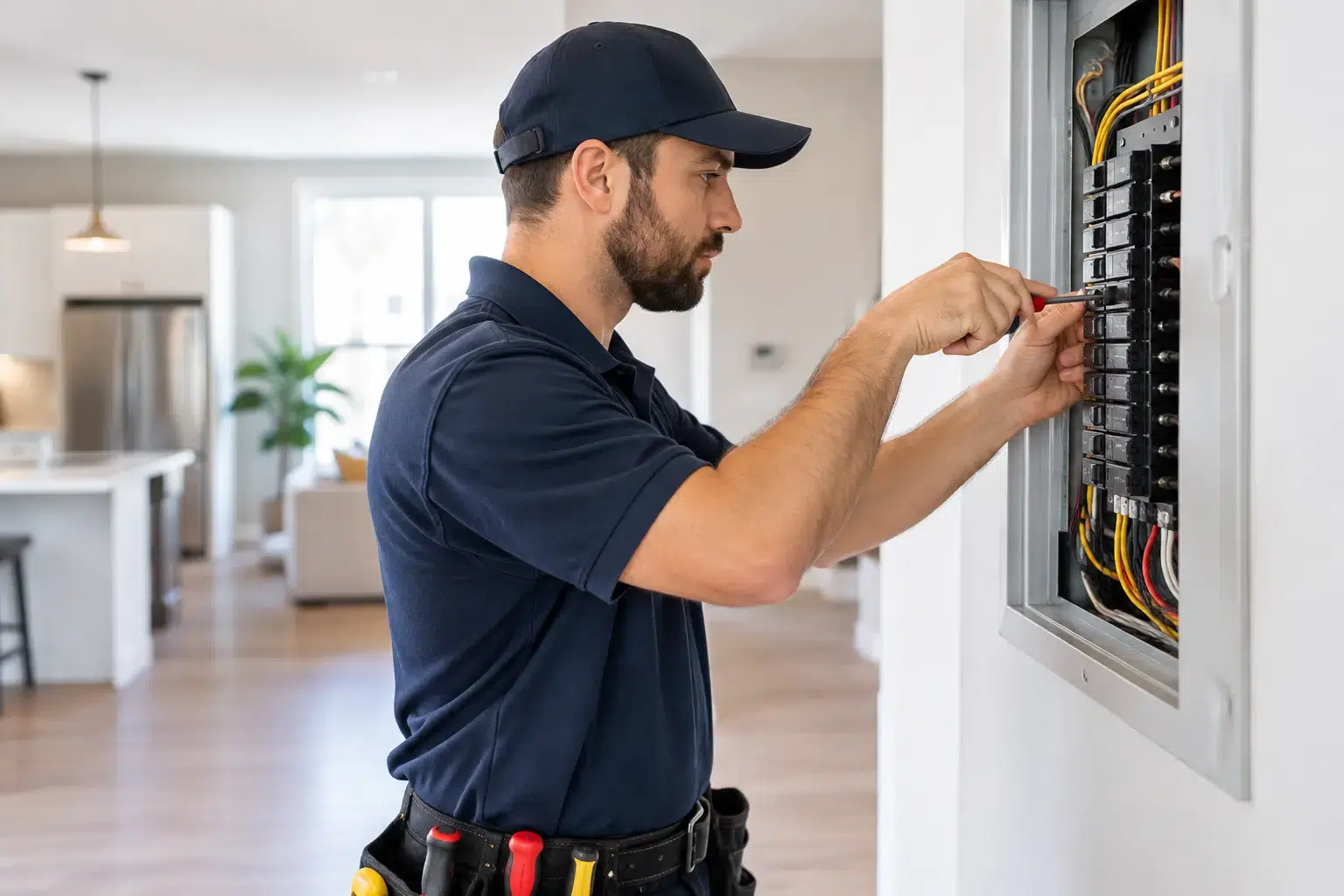
The electrical panel is the control center of the property. If breakers trip regularly, the panel feels warm, there are signs of corrosion, or there is no room for additional circuits, a service or panel upgrade may be warranted. A panel that was adequate years ago may not be suitable for central HVAC equipment, laundry appliances, kitchen devices, smart technology, and outdoor power needs all operating at once.
This improvement is not automatically necessary for every rental property. A newer panel in good condition may only need better labeling, a few dedicated circuits, or minor corrections. But when capacity is limited, trying to solve every issue with extension cords, power strips, or repeated breaker resets creates a safety and maintenance problem.
A properly sized panel can make future improvements easier as well. If you later decide to add an EV charger, generator connection, hot tub, upgraded HVAC equipment, or exterior amenities, available capacity and proper load planning matter.
Add GFCI and AFCI Protection Where Required
Ground-fault circuit interrupter, or GFCI, protection helps reduce shock hazards in areas where electricity and moisture can meet. Kitchens, bathrooms, garages, laundry areas, exterior outlets, and pool-adjacent spaces are common examples. On the Alabama coast, exterior outlets deserve special attention because weather exposure can accelerate wear on covers, boxes, and receptacles.
Arc-fault circuit interrupter, or AFCI, protection is designed to detect certain electrical arcing conditions that can contribute to fires. Requirements depend on the property type, location, and scope of work, so this is not a one-size-fits-all decision. Still, adding appropriate protection during a renovation, panel upgrade, or electrical repair is often a sensible way to improve safety.
These devices should be tested and installed correctly. A GFCI receptacle that will not reset, trips without a clear reason, or protects several downstream outlets may point to a condition that needs professional troubleshooting, not a quick replacement.
Improve Lighting for Safety, Durability, and Tenant Appeal
Lighting is among the most practical electrical improvements for rental properties because it affects first impressions, usability, and security every day. Good lighting makes stairs, walkways, entry doors, parking areas, and common spaces safer. Indoors, it can make kitchens, bathrooms, closets, and living areas feel cleaner and more functional without a major renovation.
LED fixtures are usually a strong choice for rentals because they use less energy and generally require less frequent lamp replacement. For high ceilings, exterior soffits, stairwells, and hard-to-reach areas, long-lasting integrated LED fixtures can reduce maintenance visits. The trade-off is that some integrated fixtures require replacement of the full unit when they eventually fail, so quality matters.
Outside, use fixtures rated for wet locations where appropriate. Motion-activated lighting can be useful near entries, trash areas, garages, and walkways, but it should be aimed carefully. Overly sensitive fixtures can annoy tenants and neighbors, while poorly placed lights can create glare rather than improve visibility.
Install More Convenient, Properly Placed Outlets
Tenants expect enough accessible power for phones, laptops, televisions, kitchen appliances, and work-from-home equipment. A lack of outlets often leads to overloaded power strips and extension cords running behind furniture or across walking paths. Those workarounds create clutter and can create hazards.
Adding receptacles in bedrooms, living rooms, kitchen counter areas, laundry spaces, and exterior locations can make a rental more comfortable without changing its layout. USB-equipped receptacles can be useful in select locations, although standard outlets remain more flexible as charging technology changes.
The goal is not to place outlets everywhere. It is to provide safe, code-conscious access where people actually use power. A contractor can determine whether an existing circuit can safely support added receptacles or whether a new circuit is needed.
Protect Electronics With Whole-Home Surge Suppression
Power surges do not only come from lightning. They can also result from utility switching, nearby electrical events, and large equipment cycling on and off. In a rental, a surge can damage appliances, HVAC controls, televisions, internet equipment, and smart devices. Replacing those items can quickly cost more than planned electrical protection.
A whole-home surge protective device installed at the panel provides a first layer of defense for the electrical system. It does not eliminate every risk, and sensitive equipment may still benefit from point-of-use protection. But it is a practical upgrade for properties with newer appliances, smart thermostats, keyless entry systems, and electronics.
For coastal rentals, surge protection is particularly worthwhile when paired with a review of grounding and bonding. Proper grounding supports the safe performance of the system and should be evaluated as part of any significant electrical upgrade.
Prepare for Outages and Storm Season
Reliable power is part of tenant satisfaction, especially in properties that rely on electric HVAC systems, well pumps, security equipment, or refrigerated supplies. A portable generator may be appropriate for some owners, but it should never be connected to a home through an improvised cord or backfed into a panel. That practice can endanger occupants, utility workers, and the electrical system.
A professionally installed generator inlet, transfer switch, or standby generator allows power to be managed safely during an outage. The right option depends on the property, budget, critical loads, and whether the rental is occupied year-round or used seasonally. Some owners only need to keep refrigeration, lighting, internet, and a few outlets running. Others may want broader coverage for longer outages.
Even without a generator, storm readiness should include checking exterior disconnects, securing covers, verifying weatherproof receptacles, and correcting equipment damage before it becomes an emergency.
Consider EV Charging as a Market-Specific Upgrade
EV charging is not necessary for every rental property, but it can be a meaningful differentiator for higher-end homes, long-term rentals, multifamily properties, and vacation rentals with dedicated parking. Guests and tenants who drive electric vehicles increasingly look for convenient charging, particularly when public chargers are limited or busy.
An EV charger should be planned around available electrical capacity, parking layout, cable routing, and the property owner’s billing approach. In a multifamily setting, decisions about access and electricity costs need to be addressed before installation. A dedicated, professionally installed circuit is the right foundation, not an extension cord from a garage outlet.
Make Improvements Part of a Long-Term Maintenance Plan
The best electrical projects balance immediate safety needs with the property’s long-term use. Repair urgent issues first, such as damaged wiring, failing outlets, water-exposed equipment, and frequent breaker trips. Then plan value-adding improvements such as lighting updates, surge protection, added receptacles, and outage preparedness around tenant turnovers or scheduled renovations.
Keep records of inspections, panel work, permits when required, and major installations. Clear documentation helps with maintenance decisions, insurance questions, future renovations, and property sales. It also gives the next electrician a clearer picture of what has been done.
Rental properties work hardest when their electrical systems are easy to forget. A well-planned upgrade program helps keep tenants comfortable, protects the building, and reduces the chance that a minor electrical concern becomes an urgent call. For owners who want a clear plan, MNE Electric can assess the property, explain the practical options, and complete the work correctly the first time.