
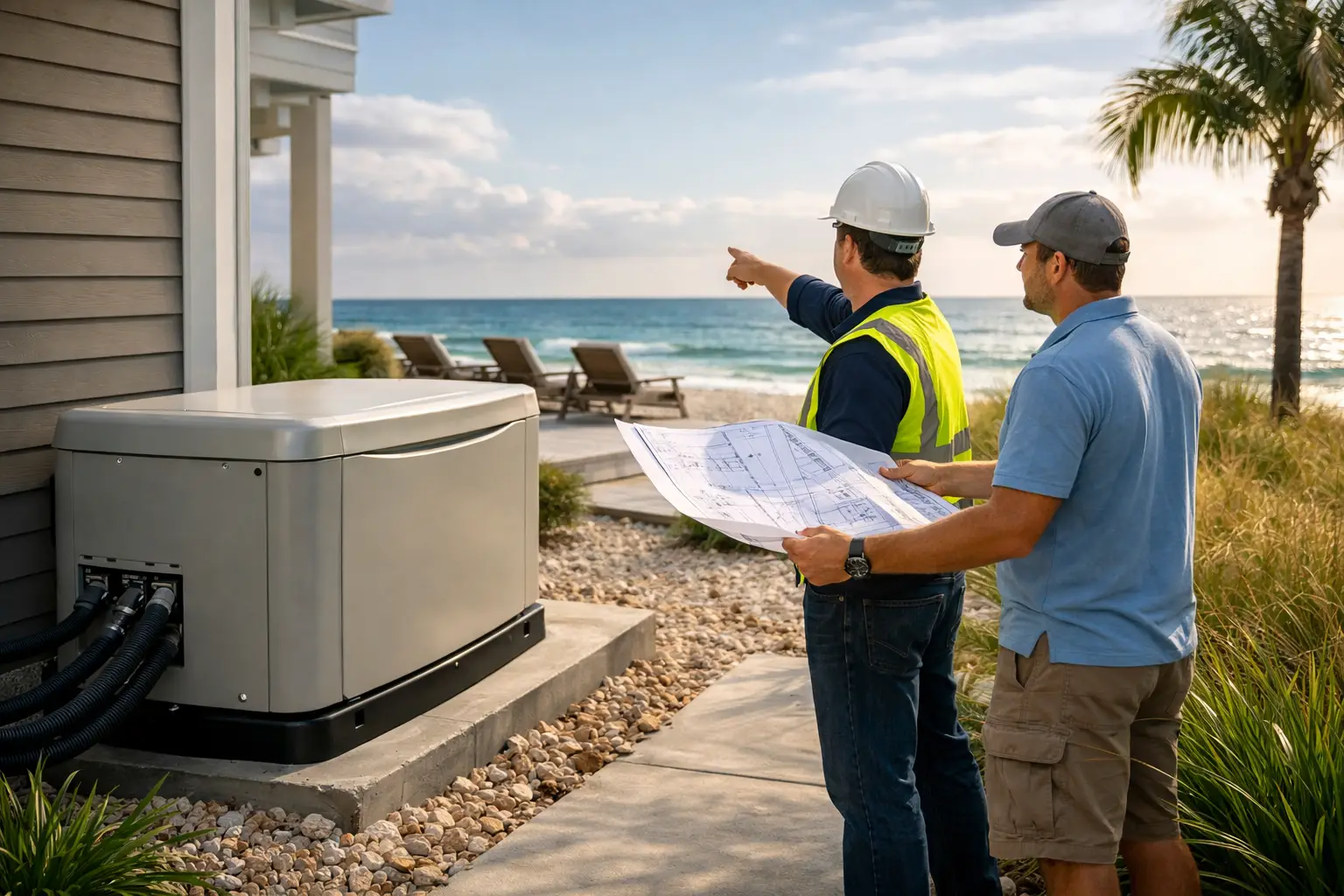
Planning a Gulf Shores Generator Project
A Gulf Shores generator project is not just about choosing a machine that starts when the power goes out. It is about making sure your home, condo, rental property, or business can safely support the equipment, the selected loads, and the transfer system that keeps generator power separate from utility power. Along the Alabama coast, storm preparation is a practical part of property ownership. A properly planned standby generator can keep essential systems running while utility crews restore service.
The best results begin before anyone selects a generator size. Every property has different electrical demands, panel capacity, fuel options, site limitations, and priorities during an outage. A licensed electrical contractor can evaluate those details and build a plan that fits the property rather than relying on a one-size-fits-all recommendation.
Start With the Power You Actually Need
Generator projects are often oversized or undersized because the first question is framed incorrectly. Instead of asking, “What is the biggest generator I can buy?” ask, “What needs to operate safely and reliably during an outage?”
For many homes, the priority list includes refrigeration, lighting, internet equipment, garage access, security systems, well pumps, a few receptacle circuits, and one heating or cooling system. Some owners also want a pool pump, electric water heater, laundry equipment, or full-home air conditioning. Those choices significantly change the required generator capacity.
A load assessment looks beyond the wattage printed on appliances. Motors in air conditioners, refrigerators, pumps, and compressors can draw a much higher starting load than their normal running load. Electric ranges, dryers, and water heaters can also place substantial demand on the system. The goal is to calculate a realistic operating plan that prevents overloads without paying for unnecessary capacity.
For a vacation rental or a commercial property, the decision may be less about comfort and more about continuity. Refrigeration, communications, security, emergency lighting, point-of-sale equipment, and access controls may need to remain available. Property managers should also consider who will operate the system and what happens if an outage occurs between guest turnovers or outside normal business hours.
Choose Between Essential-Load and Whole-Home Backup
An essential-load generator setup powers selected circuits through a dedicated transfer arrangement. It is often the right fit for homeowners who want protection for critical equipment while managing the overall project cost. This approach can provide dependable power for the systems that matter most without attempting to run every large appliance at once.
A whole-home system is designed to support a broader range of electrical use. It can be a strong option for larger homes, properties with medical equipment, owners who work remotely, or households that want air conditioning and normal daily functions during extended outages. It also requires more careful planning, because the service size, air-conditioning load, generator capacity, fuel supply, and available space must all work together.
Neither option is automatically better. A smaller, well-designed essential-load system may serve a coastal home more effectively than a large generator chosen without a clear load plan. The right choice depends on how the property is used, how long outages typically affect the area, and what level of backup power the owner expects.
Generator Placement Matters on the Coast
Generator placement affects safety, service access, noise, code compliance, and long-term equipment condition. The unit needs a stable pad, proper clearance from the structure and openings, and enough room for technicians to inspect and maintain it. Placement cannot be treated as an afterthought once a generator has been purchased.
In Gulf Shores and nearby coastal communities, salt air, wind-driven rain, elevated construction, tight lot lines, and landscaping can all influence the available locations. A generator should be positioned where exhaust is directed safely away from doors, windows, vents, and occupied outdoor areas. It also needs to remain accessible after storms, when fallen branches, standing water, or damaged fencing may create obstacles.
Condo associations, neighborhood rules, and commercial property requirements can add another layer to the process. Before work starts, it is wise to confirm any approval requirements, appearance standards, equipment screening rules, and access restrictions. Addressing those issues early helps avoid costly changes after the project is underway.
The Transfer Switch Is the Safety Center of the Project
The generator gets most of the attention, but the transfer switch is the part that makes backup power safe and usable. It manages the change from utility power to generator power and, in an automatic system, can start the generator when utility service fails. When normal power returns, it transfers the property back and allows the generator to shut down after its programmed cooldown period.
A correctly installed transfer switch prevents dangerous backfeeding into utility lines. Backfeeding can injure utility workers, damage equipment, and create serious fire hazards. Connecting a portable generator directly to an outlet or attempting improvised wiring is never a safe substitute for a proper transfer system.
The electrical panel also needs evaluation. An older panel, limited service capacity, corrosion, or crowded breaker spaces can affect project scope. In some cases, a service upgrade or panel improvement is the right first step before adding a generator. It may add cost upfront, but it creates a safer foundation for the new equipment and future electrical needs.
Plan Fuel Supply and Maintenance From Day One
Most permanent standby generators use natural gas or propane. The available fuel source can help determine generator selection, operating duration, installation cost, and placement. Natural gas can be convenient where service is available and adequately sized. Propane can provide reliable backup power in areas without natural gas, but tank capacity and fuel management need to be planned carefully.
Fuel supply should be sized for the generator’s expected demand, not assumed to be sufficient because gas or propane is already present at the property. Larger generators consume more fuel, particularly under heavy load. A qualified installation team coordinates the electrical work with the appropriate fuel professionals so each part of the system supports the other.
A generator is mechanical equipment, not a set-it-and-forget-it purchase. It needs scheduled exercise, oil and filter service, battery checks, and inspections. Coastal conditions can accelerate corrosion on enclosures, connections, and outdoor components. Regular maintenance helps identify small issues before an outage reveals them.
Permits, Inspections, and Professional Installation
A generator project involves more than setting equipment on a pad and connecting wires. Permit requirements, electrical codes, local inspections, utility coordination, and fuel work all need attention. Requirements vary based on the property type, jurisdiction, generator size, and the scope of electrical changes.
Professional installation provides accountability at every stage: evaluating loads, sizing conductors and overcurrent protection, installing the transfer equipment, grounding and bonding the system correctly, and testing operation after completion. It also gives property owners a clear point of contact if questions arise about controls, maintenance, or future electrical upgrades.
For properties in Gulf Shores, Orange Beach, Foley, and surrounding Baldwin County communities, local experience is valuable. Coastal construction and local permitting processes can shape the practical details of an installation. MNE Electric helps homeowners and businesses evaluate those details before they become surprises in the middle of a project.
A Better Way to Begin Your Generator Project
Before requesting an estimate, make a short list of what must stay powered during an outage and what would simply be convenient to have. Note major appliances, HVAC equipment, pumps, medical devices, business equipment, and any existing fuel source. If the property has had panel issues, frequent breaker trips, storm damage, or plans for additions such as an EV charger, include those details as well.
That information gives an electrical contractor a useful starting point, but an on-site assessment remains essential. The best generator project is one that matches the property, meets code, operates safely, and is practical to maintain for years. When the next storm forecast appears, the value is not in having the largest unit outside. It is in knowing the systems you depend on are properly planned to keep working.